Friday, 4 January 2019

Research Dossier

Research Task


Screenplay layout practice


Inspiration films (secondary research)
http://asianwiki.com/Inseparable_Bros
Brothers (but not through blood) look after each other and meet a girl who does not judge them, even though others do because of one brother's physical disability.

https://en.wikipedia.org/wiki/The_Beauty_Inside_(2015_film)
"One fateful day, on his eighteenth birthday, Woo-jin wakes up to see a face and body that is not his own. He is very shocked and confused, he confronts his mother with his new appearance and she is also shocked but tearfully accepts him for who he is. With the help of his mother (Mun Suk) and his best friend (Song-beck), Woo-jin is able to cope with his strange condition".

https://www.imdb.com/title/tt0110737/?ref_=ttls_li_tt
Only You is about a woman who believes in soulmates and wants to find the perfect match (after her friend tricks her when they are young).

https://www.shakespeare.org.uk/explore-shakespeare/shakespedia/shakespeares-plays/romeo-and-juliet/
The classic story about soulmates who cannot be together (mirroring the idea of my protagonist already being in a relationship).


Narrative
3 Act Structure
What is meant by the 3 act structure

The 3 act structure is used in narrative fiction that divides a story into three parts. Often called the Setup, the Confrontation and the Resolution.

Act 1 - Setup: Exposition, Inciting Incident, Plot Point One
Act 2- Confrontation: Rising Action, Midpoint, Plot Point Two
Act 3- Resolution: Pre-Climax, Climax, Denouement

Act 1 - Setup
Despite being one of three sections in a plot, Act One typically lasts for the first quarter of the story. Act One is all about setting the stage: readers should get an idea of who your protagonist is, what their everyday life is like, and what’s important to them. In The Wizard of Oz, Dorothy’s home life in Kansas forms the bulk of the exposition.

Act 2 - Confrontation
Typically the longest of all three sections: Act Two usually comprises the second and third quarters of the story.

Act 3 - Resolution
The final act typically takes up a quarter of the story — sometimes less. Act Three starts with the final clash between the protagonist and the antagonist.While on the way to the Wicked Witch’s castle, Dorothy is captured. The Witch finds out that the ruby slippers can’t be taken against Dorothy’s will while she’s alive, so she sets an hourglass and threatens that Dorothy will die when it runs out.

What is the classical Hollywood Narrative / realistic narrative
The idea of classic Hollywood narration derives from The Classical Hollywood Cinema (1985), by David Bordwell, Janet Staiger and Kristin Thompson and they said that there is a beginning (equilibrium) a disruption (disequilibrium) and resolution (reestablished equilibrium) in most classic Hollywood films.


Case Study - Battle Royal
Who are the main character (up to 5) and what is their:

Name, gender and age
Role
Dramatic Motivation
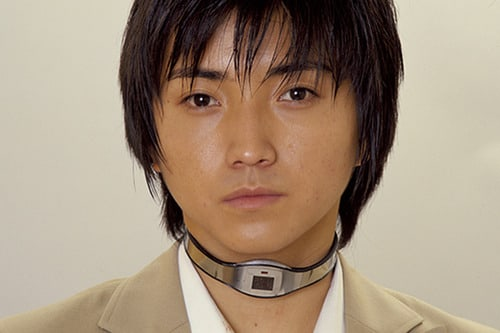
Shuya Nanahara -
He is a 14 -15 year old male. He is the main character in the film and his dramatic motivation is that he wants to protect Nakagawa as he loves her.


Noriko Nakagawa -
She is a 14 - 15 year old female. She is also the main character, her role is to help keep both herself and Nanahara alive. Her dramatic motivation is that she wants both her and Nanahara to survive.


Shogo Kawada -
He is around 18 years old, and a male. His role is to make sure that Nanahara and Nakagawa survive. His dramatic motivation is to find out what Keikos last words meant.


Kazuo Kiriyama -
He is around 18 years old, and a male. His role is to kill everyone. His dramatic motivation is to be the last surviving.
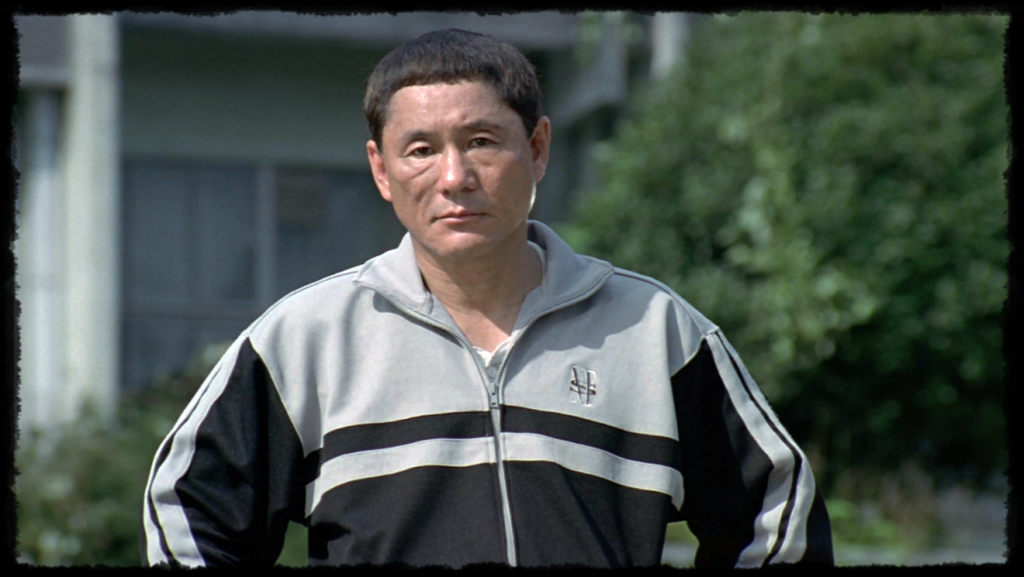

Kitano -
He is around 53 years old and a male. His role is that he is the teacher of the class and is the administrator of the Battle Royale program. His dramatic motivation is that he wants to have a better relationship with his daughter.

What genre is the film? What themes does the film exemplify?

The genre of the film is thriller, and also drama. This is shown throughout the film in various ways, for example, sometimes a character will just appear and kill someone, this give the film a thriller theme as the audience never knows when or where a character will appear from. Also it’s a drama due to the fact that sometimes the characters will just talk to each other for a couple of minutes without any action.

What happens in each of the three acts? Can you apply the realist/Classical Hollywood narrative to this film?

Start
At the start of the film we see text explaining what the Battle Royale program is and why it’s in place, and then we see the survivor of the last Battle Royale, who was a girl. Also at the start of the film we see Nanahara find his father who had hung himself. We also see Nobu cut Kitano which is where the problem is first introduced in reference to the Classical Hollywood narrative.
Middle
In the middle of the film we see all the students get individual bags, which contain things to help them survive - such as, weapons, food and water. They are then sent out into the island where they have to kill each other and the last survivor wins. In reference to the Classical Hollywood narrative they try to work on the problem by Nanahara and Nakagawa working together with Kawada to try and work out how to escape
End
The ending follows Nanahara and Nakagawa as they walk around the city, trying to cover their faces, and look natural as now that they aren’t part of the Battle Royale program they are wanted for murder and so they are just trying to live their lives without getting caught by the police.

How does this film differ, in regards to narrative, to ‘typical’ western films and TV shows? Think about characters, dialogue and narrative structures.

This film differs from typical western films/TV shows due to the fact that it’s over dramatic, where as western films/TV shows, such as Sherlock, are only dramatic when it needs to be. Also with Battle Royale most of the dialogue spoken between the characters is quite straightforward, but in Sherlock it isn’t as straightforward. Furthermore the characters in Battle Royale are different to those in Sherlock as we learn more about the actual characters in Sherlock where as, in Battle Royale you don’t get a lot of background story of the main characters. With Sherlock the story is straightforward, whereas Battle Royale it sometimes cuts to flashbacks and so the audience has to pay more attention in order to understand what’s going on in the film.

Perfect Yellow - First Draft

Monday, 10 December 2018

Understanding Codes, Conventions and Current Practice

Codes, Conventions and Current Practice

Libel is a published false statement that is damaging to a person’s reputation. Copyright is the exclusive and assignable legal right, given to the originator for a fixed number of years, to print, publish, perform, film or record literary, artistic, or, musical material. Libel is when someone says something about someone (an actor or a restaurant owner) in order to make them look bad, for example if someone said that an actor said something racist or sexist then some people would change their views on them without seeing if what the original person said was true or not . An example of copyright is someone copying a photo and selling it without crediting the original artist. In corporate videos the way that you would avoid copyright laws is to use copyright free music for the background music, also, you can avoid it by getting permission from the original artist.

An example of libel is when Rebel Wilson brought an action against Bauer Media. Bauer Media had referred Rebel Wilson as a “serial liar who had fabricated almost every aspect of her back story, from her name, to her age, to her childhood and upbringing, in order to make it in Hollywood”. The Hon. Justice John Dixon has awarded Rebel Wilson a total of $4,567,472 in damages against Bauer Media Pty Ltd and Bauer Media Australia Pty Ltd for defamatory articles published by Bauer Media about Ms Wilson.

Another example is the firing of Shirley Sherrod. Sherrod was fired in 2010 by the U.S. Department of Agriculture after Breitbart accused her of discriminating against a white farmer. Breitbart posted a video that he had received from an anonymous source that showed Sherrod speaking at an NAACP civil rights dinner. In the video it showed her talking about the hesitation she felt decades earlier when a white farmer came to her asking for help while she was working for a cooperative that intended to aid black farmers who were losing their land at a fast rate. However, what the video had shown wasn’t all of what Sherrod had stated, and it made it look like she didn’t help the farmer as much as she could’ve done. USDA officials fired Sherrod immediately after Breitbart published the video.
"On July 19, 2010, Shirley Sherrod was fired from her appointed position as Georgia State Director of Rural Development for the United States Department of Agriculture.[1][2] Her firing was an administration reaction to media reports on video excerpts from her address to an event of the National Association for the Advancement of Colored People in March 2010 and commentary posted by conservative blogger Andrew Breitbart on his website.[3] Based on these excerpts, the NAACP condemned Sherrod's remarks as racist and US government officials called on the official to resign. However, review of her full speech showed that the excerpts had been selectively edited, and that her remarks – understood in context – were about the importance of overcoming personal prejudices. The NAACP and White House officials then apologized for their earlier criticisms, and United States Secretary of Agriculture Tom Vilsack apologized for the firing and offered Sherrod a new position".

The current legislation relating to race relations, disability and discrimination is The Equality Act.
The Equality act is an Act of Parliament of the United Kingdom and has the same goals as the four major EU Equal Treatment Directives. The Act requires equal treatment in access to employment, regardless of the age, disability, gender reassignment, marriage and civil partnership, race, religion or belief, sex and sexual orientation. There are also protections for pregnant women. Different issues with representing race/gender/religion in films is that it tends to be stereotypical and some actors might get offered roles that they don’t relate to e.g. a middle eastern man being offered roles of radical terrorists. Also, there isn’t as many representations as there are actual people in the U.K (there isn’t many representations of black people compared to the amount of black people in the U.K).

Ofcom (The Office of Communications) is the UK government-approved regulatory for the broadcasting, telecommunications and postal industries of the United Kingdom. This relates to the unit because we need to know as filmmakers what is or isn’t allowed in our videos, this is because something we put in our video might not be suitable for our audience, or might offend some people.

Ethical issues: representation, e.g race, gender, religion
As media students we need to consider representation of people/places/events because we might accidentally offend someone - for example if we choose a location that has graffiti of a derogatory word in the background then that might offend someone of that race, also we need to consider representation because we want to attract the correct audiences and people wouldn't want to watch something that offends them. In corporate videos it is good practice to include a range of people from your target audience to show that the product is suitable for them. This also works the other way, for example, if you don't show someone from a certain race, gender, age group, etc. then people may wonder why they can't use the product or service. If it is a video for a company and all of the people in it are white then the company may come across as not being equal opportunity employers and this may harm their image or brand.

Current practice relating to: equipment; formats; techniques
In order to make a corporate or promotional video you need a lot of different equipment, for example, you’ll need cameras - which will be used to film the scenes, tripods - this is so that the footage is steady and usable, good microphones to pick up the dialogue, the reason you need to have a good microphone is because the video won't sound good if you use a bad microphone also it might pick up too much background noise and so you wouldn't be able to hear the person talking in the video. You’ll also need to have a storage device as you will be getting a lot of different footage, and light reflectors in order to have good lighting on the person's face. If you want to be taken seriously and you want people to invest in you either with money, time or support, you should make your video look as professional as possible - this achieved by using good sound equipment, stable camera shots, as well as multiple shots at different angles. That's why some companies pay a lot of money for corporate videos as they can make or break a company because if a company has a badly made corporate video then people will not want to buy things from them and so that would mean their sales will go down.

Production practices: client liaison; ideas development; treatments; proposals; storyboard; scripts; shooting scripts; scheduling; health and safety.
The different documents that could / should be completed before production are risk assessments, because then if something happened then you already know what to do, also you need to fill out an adult / minor talent release if you have someone in your video, this is to show that they were willing to participate in the video and so you have evidence that they are legally allowed in the video - you can't have someone in the video without a signed talent release. The adult release is for anyone over the age of 18 and the minor talent release is for anyone under that age - you also need to have the minors parents signature on the talent release to be legally allowed to film them. Sometimes you might make a storyboard as well in order to know what you plan the finished product to look like, also so you know the different shots you plan on having - this is simply to make it easier to see and so you don't spend too much time working out what shot you're on and what shot is next.

Sources:
https://www.theguardian.com/film/2018/jul/13/rebel-wilson-vows-to-fight-malicious-bauer-media-to-the-end
https://en.wikipedia.org/wiki/Firing_of_Shirley_Sherrod
https://www.legislation.gov.uk/ukpga/2010/15/contents
https://en.wikipedia.org/wiki/Shirley_Sherrod


Monday, 19 November 2018

Corporate Video Analysis Presentation


Corporate video analysis presentation
https://www.youtube.com/watch?v=gQ8DRnPLH9s

1. Different types of corporate video

Product launch/marketing
Promotion of key ideological messages and values
Internal communications
Internal training
Conference openers/show-reels
Event coverage
Idents and animated logos

2. What videos have you found? Where do they exist online?

CAE corporate video – I found most of the corporate videos on YouTube however they also might be shown on their website as that is where interested audiences might look. It might also be found on a similar career-type website where people may investigate career opportunities in manufacturing. They would be shown on YouTube because a lot of people spend most of their time on it and so it would be easy to stumble across if you were looking at similar things. Also it might be linked on another website of a similar nature as this video might have more information or the website used the video for a reference.

3. What type of video is it? / what makes it that type (codes and conventions)

The video I found is an product launch/marketing video for CAE - they are a company that produce equipment, specifically in simulation, e.g, flight, birthing, etc., and also provide training. What makes it this is the fact that it shows different clips of training centres (0.22 minutes into the video) and people using the training equipment.


4. What is it for?

The corporate video is for CAE which is a Canadian manufacturer of simulation technologies, modelling technologies and training services to airlines, aircraft manufacturers, healthcare specialists and defence customers. In the video you see different people teaching other people how to do Civil Aviation, Defence & Security or Healthcare. The video shows people using products in a range of different places and professions - these products are things like, a fake body used to practice CPR on, as well as a model of a cockpit of a plane - which is used to teach people how to properly fly a plane, it also shows people teaching others how to properly use the training equipment. This video was made so that people who have an interest in any of the shown courses can see where they can start training and also the kind of training courses they would be.


5. Who is it for?

It is for people who want to learn about Civil Aviation, Defence & Security or Healthcare, and learn about how to get into doing it. The primary audience for the products are people who want to train in a certain field or centres who hold training, for example, hospitals and flight schools. The secondary audience would be parents how think it would be a good idea for their children to do, or teachers as they can tell their students about it if any of them expressed an interest in any of the courses shown in the clip.

6. Target audience

Its target audience is anyone with an interest in things like Civil Aviation, Defence & Security or Healthcare. It is mainly targeting adults/young people as they would have the time and money to do the training but particularly education providers. The age group is likely to be more mature and for people who have an education in a certain field, for example medicine. The psychographic profile would be someone who aspires to be better as they want to better themselves and also help others.


7. Who/what is in it? How are they represented?

The people in the video are the people training/teaching, they are represented by showing small clips of the training and also by showing different statistics of their job throughout the video. People from different age groups (although all adults) and different ethic backgrounds are shown meaning that the products are for anyone regardless of their background. Multiple genders are shown and this shows that the products are aimed at different genders through representation.

8. Cinematography (shot types, angles, lighting etc.)

There are different shot types including close ups, over the shoulder shots, medium shot, and long shots. The lighting is bright and welcoming which makes the products look positive and good. This is done so that the viewers don't get bored while watching, and also it makes the whole thing look like it would be fun to try, which might interest some people. Close ups and over the shoulder shots are used so that the audience can see what it would look like without actually being there - this is also to keep the audiences attention.

9. Editing, length and pace

The editing pace is quite fast in order to make people pay attention to it, also it’s 2:10 minutes long which means that people won't lose focus as its not very long. Lots of cuts are used to go between products which are being used in different professions - this is so the audience can see the range of products better, this is also so the audience doesn't lose focus and so that the audience has information about each product equally.


10. Music and sound

The music is soft but is strong and inspirational and links in with the idea of aspiration and improvement. The reason the music is soft is so people don't get turned off by it, as they'll watch more of the video if they enjoy listening to the soft music. The reason it's inspirational is so people watching it might be encouraged to join the program.

Friday, 16 November 2018

Battle Royale Questions

Who are the main character (up to 5) and what is their:


Name, gender and age


Role


Dramatic Motivation

Shuya Nanahara -
He is a 14 -15 year old male. He is the main character in the film and his dramatic motivation is that he wants to protect Nakagawa as he loves her.


Noriko Nakagawa -
She is a 14 - 15 year old female. She is also the main character, her role is to help keep both herself and Nanahara alive. Her dramatic motivation is that she wants both her and Nanahara to survive.


Shogo Kawada -
He is around 18 years old, and a male. His role is to make sure that Nanahara and Nakagawa survive. His dramatic motivation is to find out what Keikos last words meant.


Kazuo Kiriyama -
He is around 18 years old, and a male. His role is to kill everyone. His dramatic motivation is to be the last surviving.


Kitano -
He is around 53 years old and a male. His role is that he is the teacher of the class and is the administrator of the Battle Royale program. His dramatic motivation is that he wants to have a better relationship with his daughter.

What genre is the film? What themes does the film exemplify?

The genre of the film is thriller, and also drama. This is shown throughout the film in various ways, for example, sometimes a character will just appear and kill someone, this give the film a thriller theme as the audience never knows when or where a character will appear from. Also it’s a drama due to the fact that sometimes the characters will just talk to each other for a couple of minutes without any action.

What happens in each of the three acts? Can you apply the realist/Classical Hollywood narrative to this film?

Start
At the start of the film we see text explaining what the Battle Royale program is and why it’s in place, and then we see the survivor of the last Battle Royale, who was a girl. Also at the start of the film we see Nanahara find his father who had hung himself. We also see Nobu cut Kitano which is where the problem is first introduced in reference to the Classical Hollywood narrative.
Middle
In the middle of the film we see all the students get individual bags, which contain things to help them survive - such as, weapons, food and water. They are then sent out into the island where they have to kill each other and the last survivor wins. In reference to the Classical Hollywood narrative they try to work on the problem by Nanahara and Nakagawa working together with Kawada to try and work out how to escape
End
The ending follows Nanahara and Nakagawa as they walk around the city, trying to cover their faces, and look natural as now that they aren’t part of the Battle Royale program they are wanted for murder and so they are just trying to live their lives without getting caught by the police.

How does this film differ, in regards to narrative, to ‘typical’ western films and TV shows? Think about characters, dialogue and narrative structures.

This film differs from typical western films/TV shows due to the fact that it’s over dramatic, where as western films/TV shows, such as Sherlock, are only dramatic when it needs to be. Also with Battle Royale most of the dialogue spoken between the characters is quite straightforward, but in Sherlock it isn’t as straightforward. Furthermore the characters in Battle Royale are different to those in Sherlock as we learn more about the actual characters in Sherlock where as, in Battle Royale you don’t get a lot of background story of the main characters. With Sherlock the story is straightforward, whereas Battle Royale it sometimes cuts to flashbacks and so the audience has to pay more attention in order to understand what’s going on in the film.

Battle Royale Synopsis + Logline


Battle Royale is a program that sends Japanese high school students to a remote island and forces them to kill each other off within three days until there is only one survivor, however if there is more than one person left after the three days then they all die. The film follows Shuya Nanahara, a boy in 9th grade, who’s class get chosen to take part in the program. He makes it his mission to make sure that his class mate Noriko Nakagawa survives. Each student gets a bag at the start of the program, which contains a weapon, food, water, and a map, however some people’s weapons aren’t useful as Nanahara gets a pot lid and Nakagawa gets binoculars. Throughout the three days the students get different updates, telling them which students had died and what areas of the map are going to be danger zones, for if they are in the danger zones then the collar that has been placed on their neck will explode.

Logline: 3 days, 1 survivor, who will win?

Single Camera Techniques Essay

This essay is about the different aspects of a single camera production and the different genres and formats within them. Camera : When ...