Monday, 19 November 2018

Corporate Video Analysis Presentation


Corporate video analysis presentation
https://www.youtube.com/watch?v=gQ8DRnPLH9s

1. Different types of corporate video

• Product launch/marketing
• Promotion of key ideological messages and values
• Internal communications
• Internal training
• Conference openers/show-reels
• Event coverage
• Idents and animated logos

2. What videos have you found? Where do they exist online?

CAE corporate video – I found most of the corporate videos on YouTube however they also might be shown on their website as that is where interested audiences might look. It might also be found on a similar career-type website where people may investigate career opportunities in manufacturing. They would be shown on YouTube because a lot of people spend most of their time on it and so it would be easy to stumble across if you were looking at similar things. Also it might be linked on another website of a similar nature as this video might have more information or the website used the video for a reference.

3. What type of video is it? / what makes it that type (codes and conventions)

The video I found is an product launch/marketing video for CAE - they are a company that produce equipment, specifically in simulation, e.g, flight, birthing, etc., and also provide training. What makes it this is the fact that it shows different clips of training centres (0.22 minutes into the video) and people using the training equipment.


4. What is it for?

The corporate video is for CAE which is a Canadian manufacturer of simulation technologies, modelling technologies and training services to airlines, aircraft manufacturers, healthcare specialists and defence customers. In the video you see different people teaching other people how to do Civil Aviation, Defence & Security or Healthcare. The video shows people using products in a range of different places and professions - these products are things like, a fake body used to practice CPR on, as well as a model of a cockpit of a plane - which is used to teach people how to properly fly a plane, it also shows people teaching others how to properly use the training equipment. This video was made so that people who have an interest in any of the shown courses can see where they can start training and also the kind of training courses they would be.


5. Who is it for?

It is for people who want to learn about Civil Aviation, Defence & Security or Healthcare, and learn about how to get into doing it. The primary audience for the products are people who want to train in a certain field or centres who hold training, for example, hospitals and flight schools. The secondary audience would be parents how think it would be a good idea for their children to do, or teachers as they can tell their students about it if any of them expressed an interest in any of the courses shown in the clip.

6. Target audience

Its target audience is anyone with an interest in things like Civil Aviation, Defence & Security or Healthcare. It is mainly targeting adults/young people as they would have the time and money to do the training but particularly education providers. The age group is likely to be more mature and for people who have an education in a certain field, for example medicine. The psychographic profile would be someone who aspires to be better as they want to better themselves and also help others.


7. Who/what is in it? How are they represented?

The people in the video are the people training/teaching, they are represented by showing small clips of the training and also by showing different statistics of their job throughout the video. People from different age groups (although all adults) and different ethic backgrounds are shown meaning that the products are for anyone regardless of their background. Multiple genders are shown and this shows that the products are aimed at different genders through representation.

8. Cinematography (shot types, angles, lighting etc.)

There are different shot types including close ups, over the shoulder shots, medium shot, and long shots. The lighting is bright and welcoming which makes the products look positive and good. This is done so that the viewers don't get bored while watching, and also it makes the whole thing look like it would be fun to try, which might interest some people. Close ups and over the shoulder shots are used so that the audience can see what it would look like without actually being there - this is also to keep the audiences attention.

9. Editing, length and pace

The editing pace is quite fast in order to make people pay attention to it, also it’s 2:10 minutes long which means that people won't lose focus as its not very long. Lots of cuts are used to go between products which are being used in different professions - this is so the audience can see the range of products better, this is also so the audience doesn't lose focus and so that the audience has information about each product equally.


10. Music and sound

The music is soft but is strong and inspirational and links in with the idea of aspiration and improvement. The reason the music is soft is so people don't get turned off by it, as they'll watch more of the video if they enjoy listening to the soft music. The reason it's inspirational is so people watching it might be encouraged to join the program.

Friday, 16 November 2018

Battle Royale Questions

Who are the main character (up to 5) and what is their:


Name, gender and age


Role


Dramatic Motivation

Shuya Nanahara -
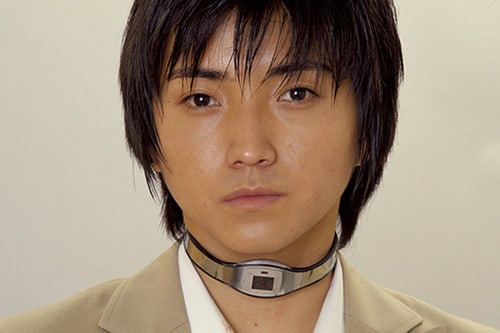
He is a 14 -15 year old male. He is the main character in the film and his dramatic motivation is that he wants to protect Nakagawa as he loves her.


Noriko Nakagawa -
She is a 14 - 15 year old female. She is also the main character, her role is to help keep both herself and Nanahara alive. Her dramatic motivation is that she wants both her and Nanahara to survive.


Shogo Kawada -
He is around 18 years old, and a male. His role is to make sure that Nanahara and Nakagawa survive. His dramatic motivation is to find out what Keikos last words meant.


Kazuo Kiriyama -
He is around 18 years old, and a male. His role is to kill everyone. His dramatic motivation is to be the last surviving.


Kitano -
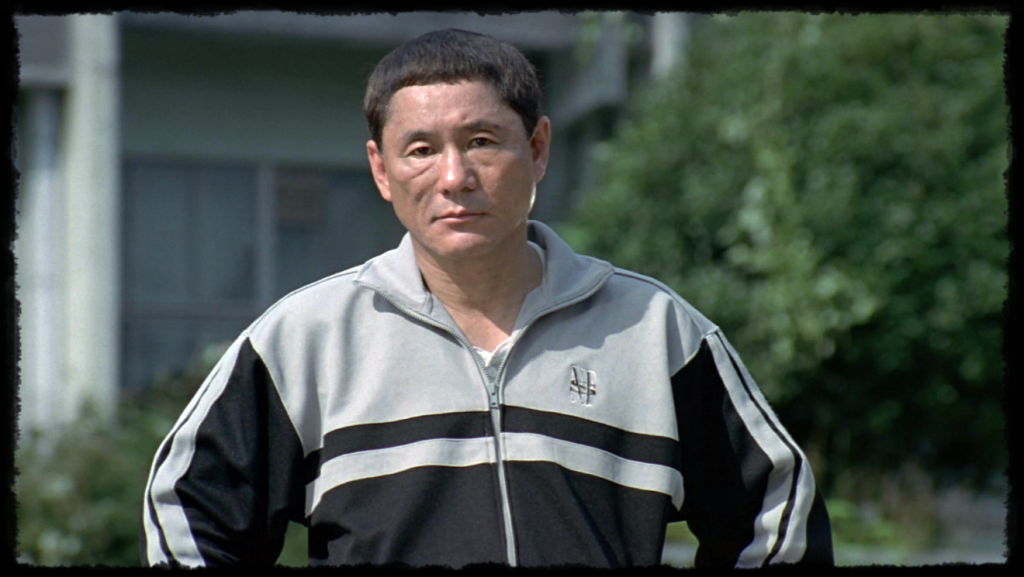
He is around 53 years old and a male. His role is that he is the teacher of the class and is the administrator of the Battle Royale program. His dramatic motivation is that he wants to have a better relationship with his daughter.

What genre is the film? What themes does the film exemplify?

The genre of the film is thriller, and also drama. This is shown throughout the film in various ways, for example, sometimes a character will just appear and kill someone, this give the film a thriller theme as the audience never knows when or where a character will appear from. Also it’s a drama due to the fact that sometimes the characters will just talk to each other for a couple of minutes without any action.

What happens in each of the three acts? Can you apply the realist/Classical Hollywood narrative to this film?

Start
At the start of the film we see text explaining what the Battle Royale program is and why it’s in place, and then we see the survivor of the last Battle Royale, who was a girl. Also at the start of the film we see Nanahara find his father who had hung himself. We also see Nobu cut Kitano which is where the problem is first introduced in reference to the Classical Hollywood narrative.
Middle
In the middle of the film we see all the students get individual bags, which contain things to help them survive - such as, weapons, food and water. They are then sent out into the island where they have to kill each other and the last survivor wins. In reference to the Classical Hollywood narrative they try to work on the problem by Nanahara and Nakagawa working together with Kawada to try and work out how to escape
End
The ending follows Nanahara and Nakagawa as they walk around the city, trying to cover their faces, and look natural as now that they aren’t part of the Battle Royale program they are wanted for murder and so they are just trying to live their lives without getting caught by the police.

How does this film differ, in regards to narrative, to ‘typical’ western films and TV shows? Think about characters, dialogue and narrative structures.

This film differs from typical western films/TV shows due to the fact that it’s over dramatic, where as western films/TV shows, such as Sherlock, are only dramatic when it needs to be. Also with Battle Royale most of the dialogue spoken between the characters is quite straightforward, but in Sherlock it isn’t as straightforward. Furthermore the characters in Battle Royale are different to those in Sherlock as we learn more about the actual characters in Sherlock where as, in Battle Royale you don’t get a lot of background story of the main characters. With Sherlock the story is straightforward, whereas Battle Royale it sometimes cuts to flashbacks and so the audience has to pay more attention in order to understand what’s going on in the film.

Battle Royale Synopsis + Logline


Battle Royale is a program that sends Japanese high school students to a remote island and forces them to kill each other off within three days until there is only one survivor, however if there is more than one person left after the three days then they all die. The film follows Shuya Nanahara, a boy in 9th grade, who’s class get chosen to take part in the program. He makes it his mission to make sure that his class mate Noriko Nakagawa survives. Each student gets a bag at the start of the program, which contains a weapon, food, water, and a map, however some people’s weapons aren’t useful as Nanahara gets a pot lid and Nakagawa gets binoculars. Throughout the three days the students get different updates, telling them which students had died and what areas of the map are going to be danger zones, for if they are in the danger zones then the collar that has been placed on their neck will explode.

Logline: 3 days, 1 survivor, who will win?

Tuesday, 6 November 2018

3 Act Structure

What is meant by the 3 act structure

The 3 act structure is used in narrative fiction that divides a story into three parts. Often called the Setup, the Confrontation and the Resolution.

Act 1 - Setup: Exposition, Inciting Incident, Plot Point One
Act 2- Confrontation: Rising Action, Midpoint, Plot Point Two
Act 3- Resolution: Pre-Climax, Climax, Denouement

Act 1 - Setup

Despite being one of three sections in a plot, Act One typically lasts for the first quarter of the story. Act One is all about setting the stage: readers should get an idea of who your protagonist is, what their everyday life is like, and what’s important to them. In The Wizard of Oz, Dorothy’s home life in Kansas forms the bulk of the exposition. 

Act 2 - Confrontation

Typically the longest of all three sections: Act Two usually comprises the second and third quarters of the story.

Act 3 - Resolution


The final act typically takes up a quarter of the story — sometimes less. Act Three starts with the final clash between the protagonist and the antagonist.While on the way to the Wicked Witch’s castle, Dorothy is captured. The Witch finds out that the ruby slippers can’t be taken against Dorothy’s will while she’s alive, so she sets an hourglass and threatens that Dorothy will die when it runs out.

What is the classical Hollywood Narrative / realistic narrative

The idea of classic Hollywood narration derives from The Classical Hollywood Cinema (1985), by David Bordwell, Janet Staiger and Kristin Thompson

Thursday, 18 October 2018

The Commissioning Process

The commissioning process is the process of the script going through different people before finally going into production. The different job roles include; commissioning editors, producers, directors, script editors, agents and writers.

Agent representation is when an agency gives an actor, music artists, and screenwriters an agent who is in charge getting the client a job and, they deal with the meetings and legal work for the client. Some companies won’t accept a client unless they have an agent representing them. PBJ represent the writer, actor and director Jonnie Bayfield who went to the same college as I do: https://www.pbjmanagement.co.uk/artists/jonnie-bayfield

Optioning and payment are how long a film takes to make and how much money the producer/studio gets. The producer/studio can extend the payment and will receive another one however the negotiating process is based on different aspects which include the potential budget of the film. Writers can be optioned but never get their scripts made into films or TV programmes. A writer will be optioned for a certain amount of time for a certain amount of money which means they cannot sell their script anywhere else in that time.

Professional presentation is how professional you need to look while presenting your idea to your audience. When presenting you need to be clear and need to try to keep the audience engaged. Often the audience will ask you questions and so you need to know as much about your idea as possible. Also, in regards to your work, you should present work in the appropriate format and through the appropraite people. For example, if trying to get a screenplay optioned, you must format it correctly and submit it to your agent or a competition (although some places will still take unsolicited scripts).

Time management is really important for writers as people can be waiting on you. Also, you have to find your own work and often work to tight deadlines. If you don't meet deadlines, you can ruin your reputation and that is really important for a writer as it's how you get your next job.

Copyright is when someone creates an original piece of work and has exclusive legal right to say who can use their piece. Copyright laws last until 70 years after the author’s death, however if the creators date of birth is unknown then the copyright expires 95 years after publication. If someone uses the material without following the copyright laws, then they can get sent to court. The original creator can sell off their piece to a company which means that the company will then have the exclusive legal right to the copyright of the piece. An example of copyright infringement was when Michael Brown established the Lightsaber Academy which he didn't get permission for from Disney, who owns Star Wars. Writers have to be careful that they don't copy someone else's idea as they can be sued. Plagiarism is when someone uses or copies another person’s work and tries to pass it off as their own work. Due to people’s work being copyrighted whoever commits plagiarism will face legal charges, however this is an issue for scriptwriters as sometimes 2 people have a similar idea and so one of them might get accused of plagiarism even if it was unintentional, however it is still illegal and they can end up in court whether they intended to plagiarise it or not.

Bias is the prejudice for or against one person or group, this is usually in a way that would be considered unfair. In the terms of writing, the writer might be biased towards one idea, which they should try to avoid. When making a film being biased is frowned upon since the film might be too negatively biased towards a certain group of people and so some people might get offended. 

Censorship is when material that is considered objectionable is suppressed, examples of these are speech and public communication. Censorship can be conducted by a government, private institutions, and corporations. If a film has strong language, nudity or drug use then they will get censored, furthermore sometimes countries will ban a film due to it not following the censorship law.

Watershed is the part of the day when mature/adult themed programs are broadcast. Different countries have different watershed times, for example in Australia the watershed time starts at 7:30pm, where as in Italy it starts at 10:30pm. The reasoning for having a watershed time is because children might re-enact what they see and so the watershed it timed for when the children will be asleep. Writers have to think about the brief they have been given or who they are writing for as they need to make the script appropriate. There's no point writing a script for young people if C4 have commissioned it for a pre-watershed time slot.

Libel is when someone publishes a false statement that will be damaging to another person’s reputation. The person guilty of using libel then they can face legal issues. Sometimes someone might include an exaggerated character in their show to try and damage the persons reputation without being guilty of libel. Writers must therefore make sure they either change characters so they are not likely to be too similar to a real person or they need to be 100% sure that information they are including in their work is 100% true.

A commissioning editor’s job is to buy authors, book titles or ideas for publication. This means that they must be able to go out to libraries and book fairs for their research, they also use the internet to do their research. A commissioning editor must be able to communicate well, as they often talk to their clients, this also means that they must be good at planning and negotiating as they would have to plan different things with their clients and negotiate with them. They also need to be able to have a proactive approach to work and be self-motivated, this is because they could become self-employed or freelanced which is a lot of work.  An example of a commissioning editor is Clare Sillery who is known for Louis Theroux's Altered States (2018).
Producers are the people in charge of the whole production which means they are the ones who take the idea and gather everyone who needs to help work on the idea (cast and crew). A producer needs to have a great understanding of every part of film making. This includes screenwriting, directing, editing and music. The producer also needs to have excellent communication and interpersonal skills, this is since they will be voicing their opinion on something to a whole crew of people. A producer’s responsibilities include all part of production, this includes; development, pre-production, production, post-production and marketing. However, it is rare to find a producer who have expertise in all four parts of production, which is why producers give some of their responsibilities to executive producers, co-producers, line producers and associate producers. An example of a producer is Steven Spielberg.
Directors are the people who direct the whole production and work closely with the other people involved, for example, producers and writers. A director must be able to see the broader picture and can lead and motivate actors and crew all while in a high stress environment. A director must know what is happening in each scene as they are being shot and how they all fit together at the end. A director is also responsible for both the creative and technical parts of shooting also they need to make sure the cast and crew are working in a safe environment. Sometimes directors started working as researchers then became script editors and then story editors before finally directors or producers. An example of a director is Quentin Tarantino. Directors often work very closely with the writer during the pre-production stage so that they have a shared view of the end product. Their relationship is important and people even run courses on how important collaboration is in Film & TV: https://lfs.org.uk/workshops/lfs-workshops/901/script-screen-directorwriter-collaboration-tim-fywell
Scriptwriters are the ones who write the screenplay that the producer, director, production designer, composer and editor, cast and crew use to make the whole production. A scriptwriter must produce highly creative writing within a strict deadline, also in order to create a viable product they must work with the script production team. A screenplay also needs to conform to the logical principles of dramatic construction, as well as industry format and style.  Screenplays are always written in Courier font at size 12 and they have the same conventions such as scene headings, actor directions and slug lines.


Some concerns someone could have if they choose script writing as a career is that they might, not actually have many ideas for a script and so are just writing similar stories. Also, they might only have one brilliant idea and then flop and so they then can’t get back to where they were. An example of a director is Aaron Sorkin

Script editor are the people who edit the screenplay that the scriptwriter wrote. The script editor must form objective, reasoned and valid opinions not just about the screenplay, but also about the premise, synopsis and treatment. Often the script editor has a keener insight on the structure of screenplays than scriptwriters, this is because the scriptwriters only need to write the script whereas the editors need to make sure it flows fine and will work well when it is put onto the screen. Script editors are heavily involved in a lot of different development meetings, one-to-one editorial meetings and regular email feedback. An example of a director is David Whitaker
Agents are the people who are responsible for finding work for clients. Agents must have great communication skills, as they need to talk to their client and the companies to get work for their clients. They often have different meetings and appointments which means that they must have a good memory and good time management skills. An agent also needs to have a clear understanding of films and the cinema in order to find their client the correct role, which is also why they need to be able to recognise when someone is talented.

A way that a script can go into production is through competitions where people can send their work in and it will be seen by whoever is running the competition, for example – BBC Writers Room. Also, sometimes a scout might look for talented writers to write for their company. Another way is that someone could just keep writing scripts and putting them out in the world and hope a corporation will see it. 

https://www.screenskills.com/careers/job-profiles/content-creation/producer/
https://www.screenskills.com/careers/job-profiles/content-creation/director/
https://www.screenskills.com/careers/job-profiles/content-creation/script/
https://en.wikipedia.org/wiki/Watershed_(broadcasting)
https://en.wikipedia.org/wiki/Censorship
https://en.wikipedia.org/wiki/Bias
https://en.wikipedia.org/wiki/Wikipedia:Public_domain
https://www.bbc.co.uk/copyrightaware/what-is
https://www.imdb.com/name/nm1900172/
https://www.upcounsel.com/disney-trademark-infringement

Single Camera Techniques Essay

This essay is about the different aspects of a single camera production and the different genres and formats within them. Camera : When ...